In brief
- First stone laid on 20 January 1752, to a design by Luigi Vanvitelli.
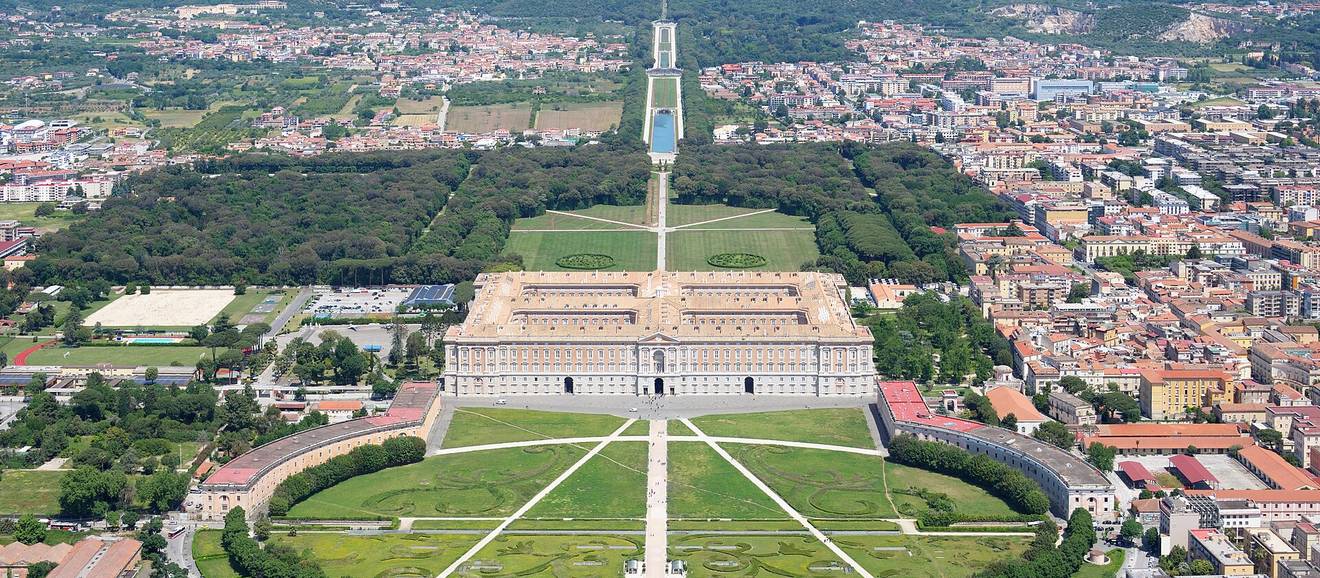
- Five storeys, 42 metres high, about 1,400 rooms.
- The Grand Staircase has 116 steps of Trapani marble.
- A UNESCO World Heritage Site since 1997, together with the park, the Carolino Aqueduct and San Leucio.
A capital for the Bourbons
In the mid-eighteenth century Charles of Bourbon, King of Naples, decided to build a new royal palace on the plain of Caserta, away from the sea and the city. The design was entrusted to Luigi Vanvitelli, and the first stone was laid on 20 January 1752. Charles left Naples in 1759 to become King of Spain, and the work went on under his son Ferdinand; after Luigi Vanvitelli died in 1773, his own son Carlo took charge.
Facts and figures
| First stone | 20 January 1752 |
| Storeys | 5 |
| Height | 42 metres |
| Rooms | About 1,400 |
| Grand Staircase | 116 steps of Trapani marble |
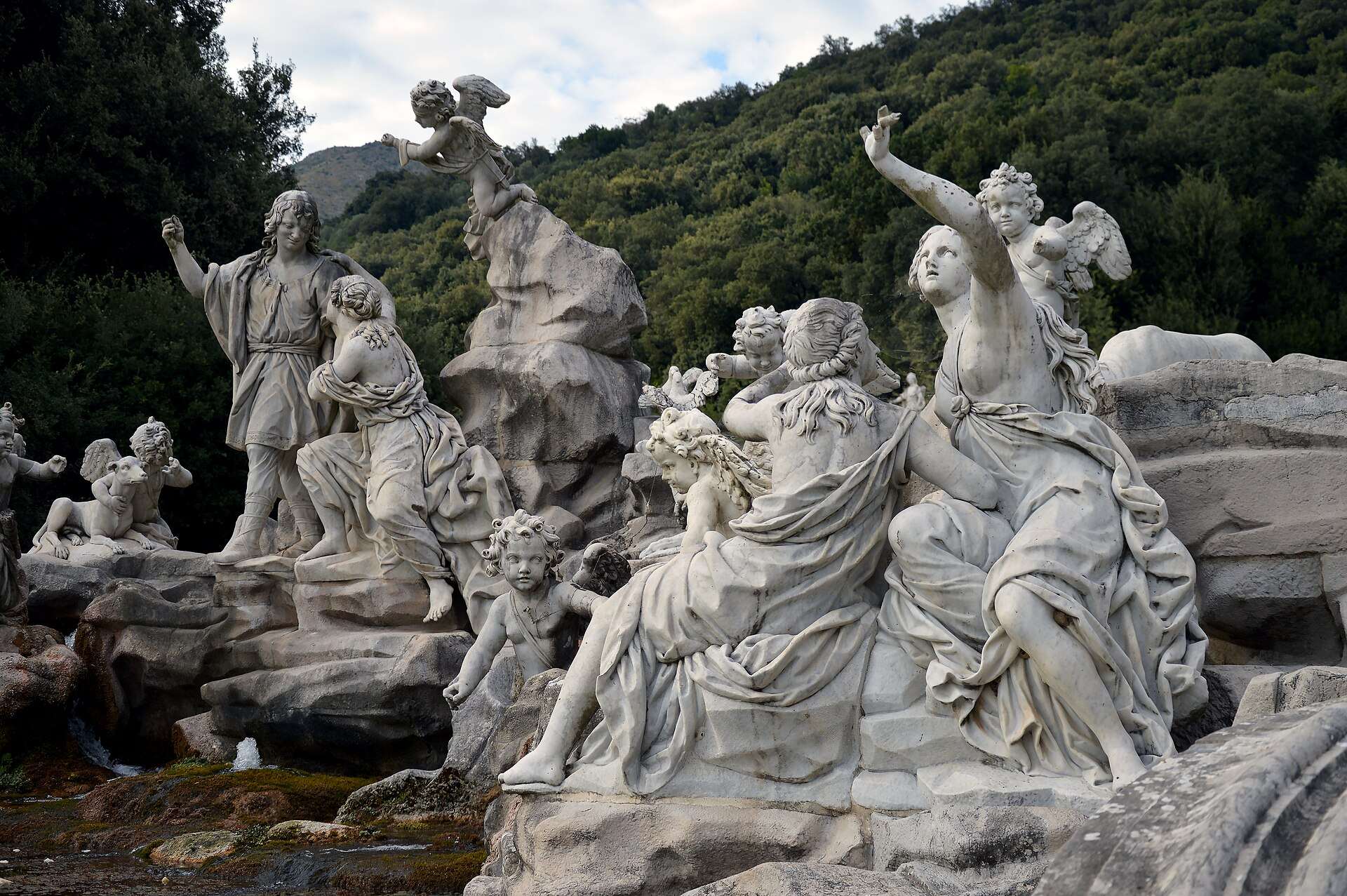
| Via d’Acqua (water way) in the park | About 3 km |
| Grand Cascade | 82-metre drop |
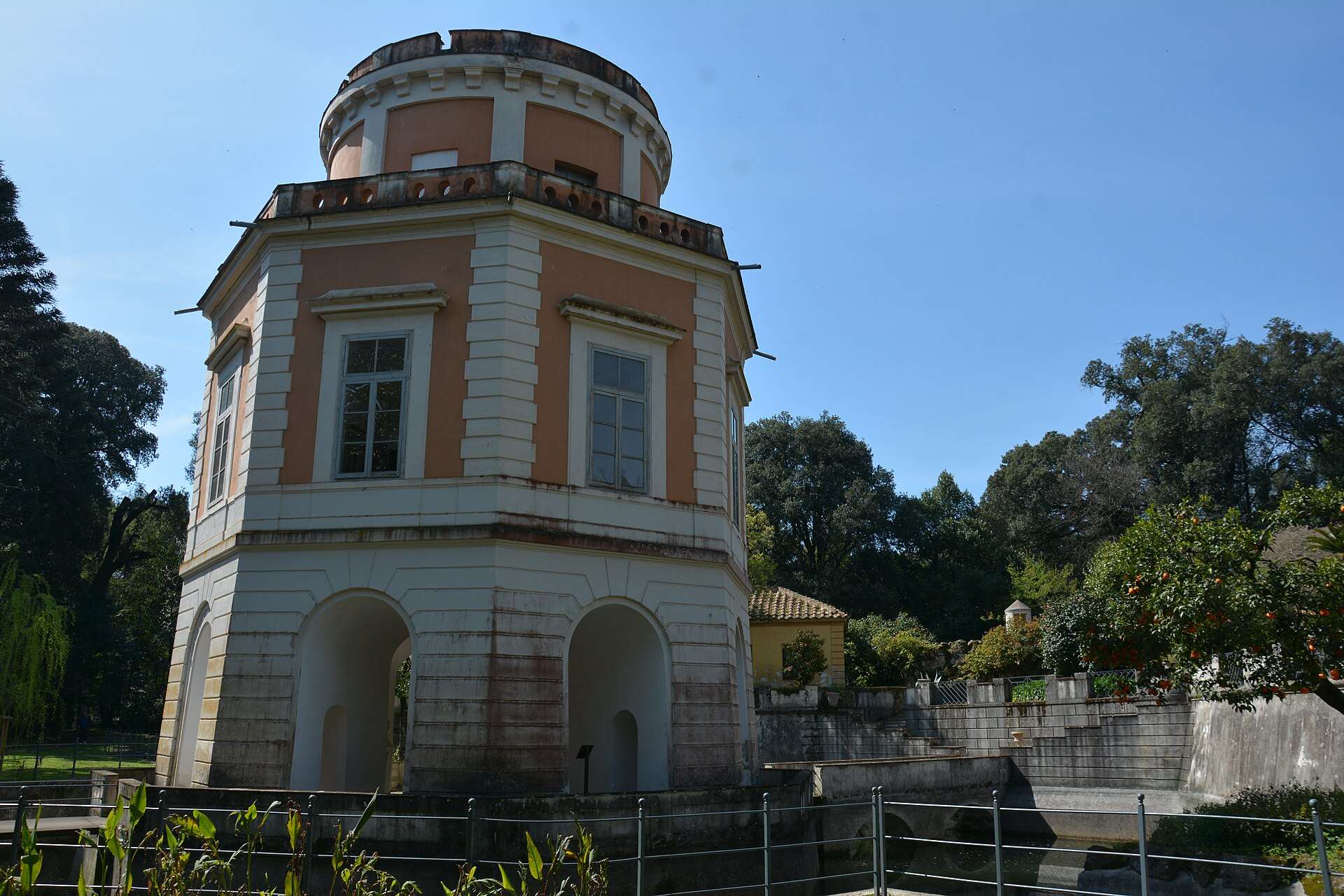
| English Garden | 23 hectares |
Not to miss inside the palace
- The Grand Staircase, with its two marble lions and the 116 steps that rise to the Upper Vestibule.
- The Palatine Chapel, opened at Christmas 1784.
- The Court Theatre, opened in 1769 and open on Saturdays and Sundays from 10:00 to 13:00.
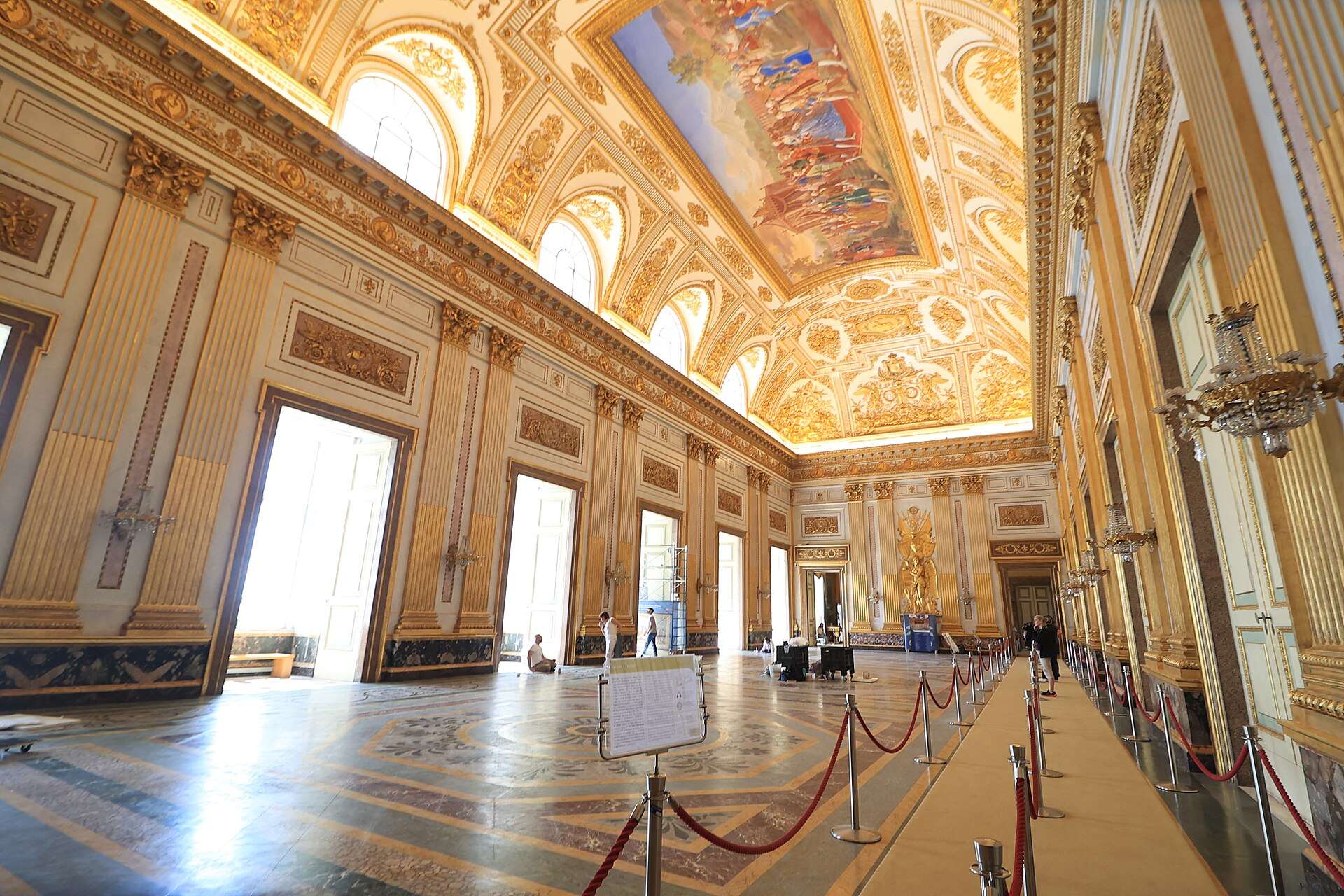
- The Throne Room, decorated between 1811 and 1845.
The UNESCO site
In 1997 UNESCO added the eighteenth-century Royal Palace to the World Heritage List, together with the park, the Aqueduct of Vanvitelli and the San Leucio complex. The four places are linked: the aqueduct carries water to the fountains in the park, and San Leucio was the silk colony founded by the Bourbons. The other two stops are in our Around Caserta section.
From Royal Palace B&B
The B&B is in a historic building in the centre of Caserta, a short walk from the Royal Park and 1.4 km from the palace’s main entrance. For an unhurried visit that also takes in San Leucio and the aqueduct, stay at least two nights.
Frequently asked questions
Who built the Royal Palace of Caserta?
The architect Luigi Vanvitelli, commissioned by Charles of Bourbon, King of Naples. The first stone was laid on 20 January 1752; after Luigi’s death the work was continued by his son, Carlo Vanvitelli.
How many rooms does the Royal Palace of Caserta have?
About 1,400, spread over five storeys, in a building 42 metres high.
When did the Royal Palace become a UNESCO World Heritage Site?
In 1997, together with the park, the Carolino Aqueduct and the San Leucio complex.
Sources
- Reggia di Caserta, official website
- UNESCO, Royal Palace at Caserta, Aqueduct of Vanvitelli and San Leucio
This is not the official website of the Reggia: tickets are sold through reggiadicaserta.cultura.gov.it.